Expanding Puppetry's Reach: Defining Applied Puppetry
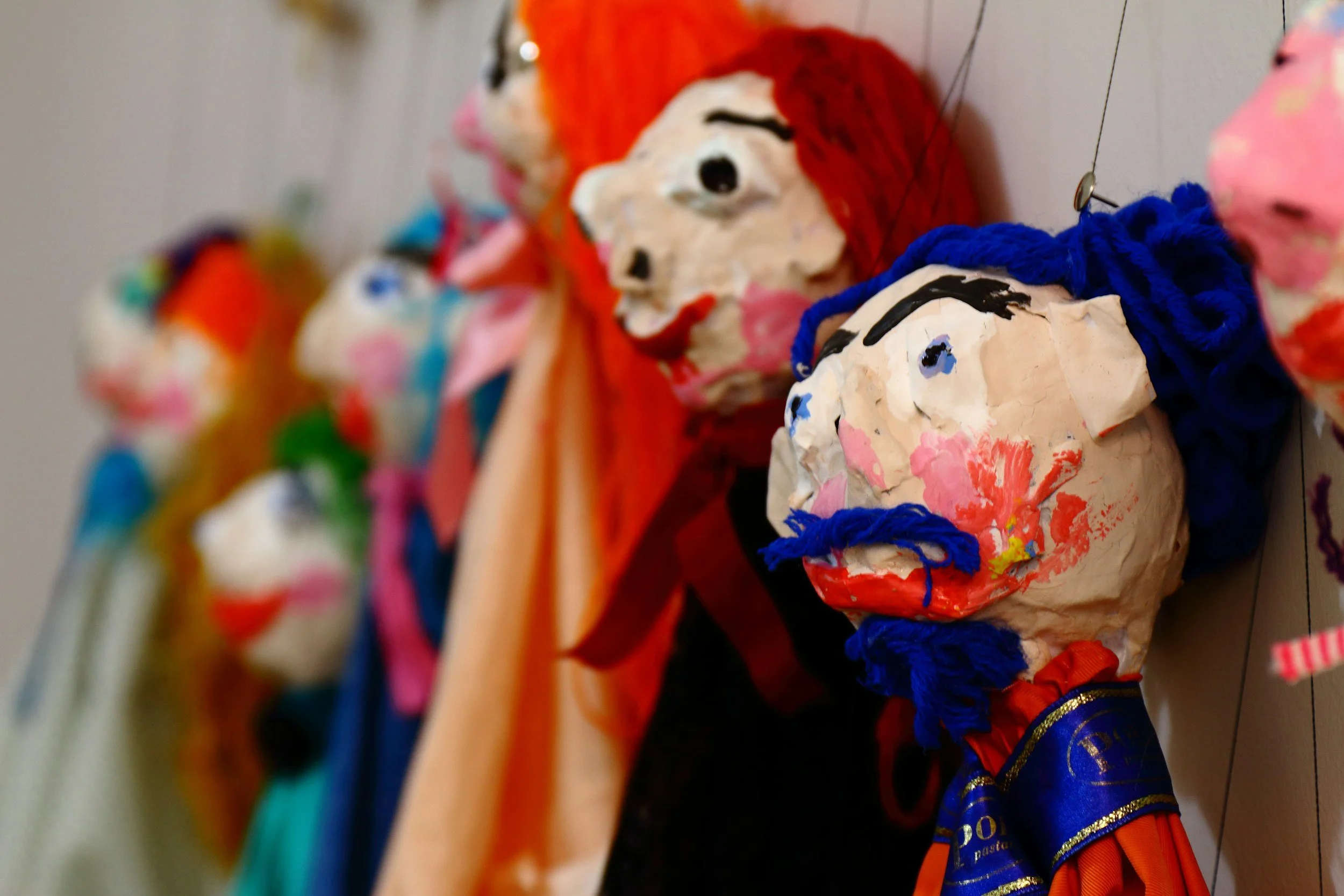
Puppetry is a powerful, transformative art form, but what happens when it extends beyond the stage?
Written by
Amanda Petefish - Schrag
Enter “applied puppetry”—a concept as dynamic as the art form itself, yet not always easy to define. For some practitioners, the term “applied puppetry” provides a valuable framework, while others see it as too restrictive or ill-fitting for the diverse ways puppetry is used. As we gather for the 2025 Puppet Power Applied Puppetry Conference, we have the opportunity to clarify, explore, and expand our understanding of what applied puppetry means and how it functions in different contexts.
What is Applied Puppetry?
At its core, applied puppetry refers to puppetry used outside or beyond conventional theatrical performance to serve educational, therapeutic, social, and/or community engagement purposes. However, the precise definition varies widely depending on context and intent. Here are a few working definitions that highlight the diversity of thought on the subject:
A broad term encompassing puppetry practices in community arts, education, and therapy. (Smith, Matt. Applied Puppetry. Bloomsbury Publishing, 2024.)
A tool for social change, advocacy, and activism.
The use of puppetry beyond performance to engage with specific social, cultural, or educational objectives.
A practice that fosters awareness, empathy, and action on complex societal issues through storytelling and visual metaphor.
An interdisciplinary approach that employs puppetry for design thinking, knowledge production, and dissemination.
A collaborative, process-driven practice emphasizing shared creation, empowerment, and agency.
A method for fostering communication, social connection, and personal or community growth.
Puppetry Meets “Wicked Problems”: Tackling the Toughest Issues
One of the most compelling aspects of applied puppetry is its ability to engage with wicked problems—complex, multifaceted issues with no clear solutions. But what gives puppetry its unique power to address these challenges?
· Visualizing Complexity – Puppets can personify abstract or difficult concepts, making them more tangible and accessible.
Encouraging Dialogue – Puppetry fosters discussion by offering a safe space to explore contentious or sensitive topics.
Building Empathy – The symbolic and narrative power of puppets allows audiences to connect emotionally with different perspectives.
Enabling Participatory Solutions – Applied puppetry often invites community members into the creative process, giving them agency in addressing issues.
Providing a Low-Risk Space for Experimentation – Through puppetry, individuals and communities can test different approaches to problems without real-world consequences.
Questions to Consider
To deepen our exploration of Applied Puppetry, we’ll be considering a range of questions within the conference’s various performances, workshops, panels, and discussions. The following are just some of the many questions that may arise:
· How can puppetry foster dialogue, resilience, and creative problem-solving within communities?
How does puppetry reimagine collective memory and cultural identity in addressing complex social issues?
What ethical considerations arise when collaborating with diverse communities and sensitive topics?
How can digital and hybrid puppetry expand accessibility and engagement?
What role does puppetry play in intergenerational and cross-cultural storytelling?
How can applied puppetry be integrated into education and social engagement?
How can practitioners build sustainable partnerships with community organizations and other sectors?
What training and professional development opportunities are needed to support applied puppetry?
How can research in applied puppetry contribute to broader discussions in the arts, humanities, and social sciences?
What strategies can be used to secure funding and support for applied puppetry projects?
Moving Forward
Rather than settling on a single definition of applied puppetry, this conference encourages us to embrace its evolving nature. By engaging in dialogue, sharing experiences, and challenging assumptions, we can refine our understanding and expand the impact of puppetry as a tool for change.
As we explore applied puppetry in all its forms, let’s consider not just how we define it, but how it can continue to evolve to meet the needs of artists, educators, policymakers, activists, therapists, researchers, and communities worldwide.

Amanda Petefish-Schrag
Amanda is a teaching artist and theatre practitioner working in overlapping performance areas - puppetry, directing, and playwriting. Her theatre research and practice across these areas focuses on theatre's social-ethical function within communities, particularly as it relates to humans, ecology, and the environment
Throughout her work, she strives to cultivate relational, community-engaged and oriented theatre practices — re-imagining what theatre is and who it is for.
Gallery